


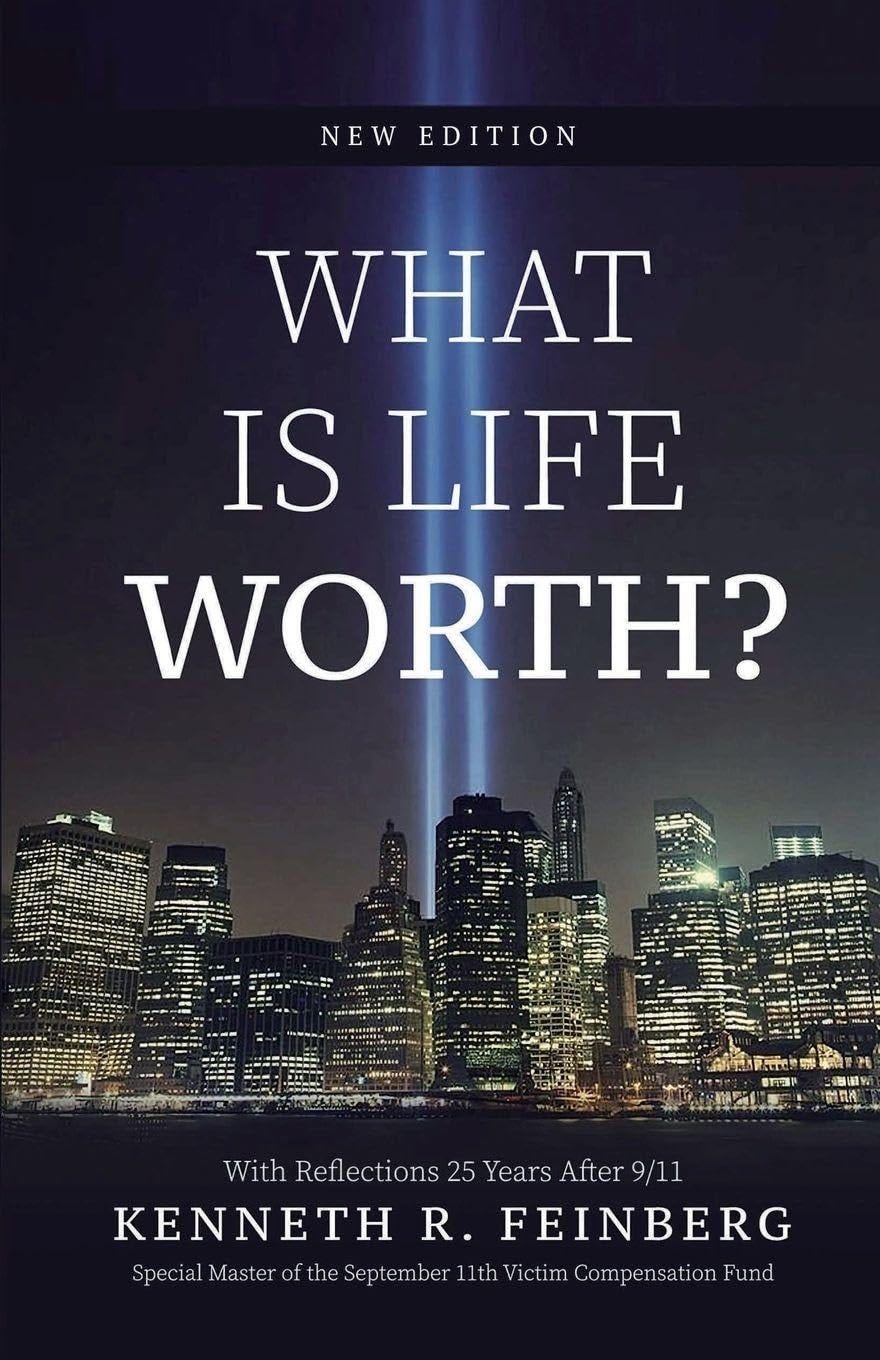
The attacks on the World Trade Center and the Pentagon on September 11, 2001, were the most aggressive assault on the United States since the Japanese attack on the naval base at Pearl Harbor on December 7, 1941.
While the 9/11 attacks did not lead to a global conflict on the scale of World War II, under the rubric of a War on Terror the United States went to war in Afghanistan, which ended in failure after twenty years, and invaded Iraq, which remains enmeshed in the Middle East’s cauldron of violence and insecurity.
A number of measures were adopted, meant to provide protection from further terrorism on the “homeland,” which on the whole they did. A Department of Homeland Security was established, intended to protect Americans. Now it oversees the persecution of immigrants. The United States has never recovered the sense of security that existed before the lethal destruction in downtown Manhattan and at the Pentagon.
In the aftermath of 9/11, there was one remarkable and extraordinarily positive result: the creation of the September 11th Victim Compensation Fund. It was established by an act of Congress within days of the attacks, and under its authority $7 billion was disbursed to 97 percent of the affected families, as an alternative to litigating individual claims against the airlines and U.S. government agencies.
The shock of the attacks had been so profound that the nation unified in grief and resolution, to respond not only militarily but also with compassion.
President George W. Bush’s attorney general, John Ashcroft, appointed the lawyer Kenneth R. Feinberg to be the special master of the fund, which was notable because Feinberg had previously served as chief of staff to Senator Edward Kennedy. His appointment reflected the federal government’s bipartisan approach to dealing with the crisis.
Feinberg was already known as an expert in mediation and dispute resolution. He had served successfully as a court-appointed special master in a number of prominent cases, including lawsuits against the manufacturers of Agent Orange, the chemical used as a weapon in Vietnam that had sickened American GIs as well as countless Vietnamese. He also mediated cases against the manufacturers of asbestos.
When recruited to the 9/11 fund, Feinberg said that he would work pro bono, without any compensation. He and a small staff met with all the families and reached judgment on individual payments, based on the lifetime expectation of income, which was exceptionally complicated because the victims represented a wide range of income levels, from bankers to waiters to janitorial staff.
I was introduced to Feinberg as the fund was concluding its work, and he agreed to write a book about the experience, published by PublicAffairs, called What Is Life Worth?: The Unprecedented Effort to Compensate the Victims of 9/11. The book later became the basis for the film Worth, released in 2021, in which Feinberg was played by Michael Keaton.
The book has now been re-released, to mark twenty-five years since the attacks, and the new edition includes Feinberg’s reflections on the fund and on how the country might respond today to a catastrophe of comparable scale.
Here is an excerpt:
Would our national leaders step up as they did in 2001 to create a bipartisan fund paid with taxpayer dollars to assist those bearing the brunt of the suffering?
When I look at the political and social landscape of today, I can’t imagine a positive response to this question.
Comparing the America of 25 years ago with the world of today offers a bleak and stunning contrast. Today’s political climate does not provide fertile ground for the creation of programs designed to meet urgent human needs in the fairest, most equitable, least partisan ways. Quite the contrary.
Where the 9/11 Fund offered help to all victims of the terrorist attacks, today we witness a presidential administration that is bent on dividing America into those who are “deserving” and “undeserving,” pitting citizens against noncitizens and “red states” against “blue states.” Meanwhile, arbitrary racial, gender, and class distinctions are allowed to influence public policy.
And while the 9/11 Fund was an act of open-handed generosity funded by American taxpayers, today we see government defunding or terminating programs offering foreign aid, domestic social safety net programs, and financial support for nonprofit organizations in both the arts and education. In too many circles, government is demonized and taxation is labeled illegitimate.
When the movie was about to be released, I wrote a piece posing the question “How the Hell Does He Do It?” inspired by a podcast interview of Feinberg with the writer Michael Lewis, which I said was “as close as we are likely to get” to an explanation of Feinberg’s approach: a combination of ego, empathy, savvy, immersion, and intimidation in a way that is not bullying. For all the emotion that is inevitable in tragic situations, Feinberg consciously never gets too close to anyone he is dealing with. Of all the families he helped after 9/11, he said, only one sent him flowers.
To read Feinberg’s book again is to be reminded of how inspiring the work of the Victim Compensation Fund was. And after reading his reflections in 2026, my hope is that we will never again be confronted with a catastrophe of that magnitude — and if we are, that as a nation we will choose to respond to the victims as well as we did twenty-five years ago.
*******************************************
Coming tomorrow: Kenneth R. Feinberg’s commentary “Remembering the Victims”

I thought the editorial, my Dad died on flight 93 --- expressed the same thoughts. https://www.nytimes.com/2026/09/09/opinion/911-flight-93-america-nation.html?searchResultPosition=1
We lost so much.