[COPY] In The Garden of Memory
Part Six: John the Savior

Baghdad, 1940. A shabby hotel in a chaotic city. Jozef, Marta, and Robert Osnos arrived, desperate for a place to stay. The proprietor noted their Polish passports and disappeared for a moment.
“He came back with a tall slender man who said in Polish, ‘What’s going on?’ then something in Arabic, then again in Polish, then arranged to have a room for everybody and promised to come to our quarters later to explain everything. That was John the Savior! He played a main role in our flight and my warmest feelings he will have forever.”
--From Marta Osnos’s memoir, Exodus: From Occupied Warsaw to Bucharest, Istanbul, Baghdad and Finally, Safety in Bombay
*********************************
To survive in the mayhem of World War II in Europe, especially if you were Jewish, meant some combination of miracles — a composite of luck, courage, guile, and coincidence.
Jozef, Marta, and Robert’s arrival in Baghdad was months into their journey from Poland, and at every stop there were great dangers and fateful encounters that enabled them to press on. In Bucharest there was an earthquake that terrified Robert even more than the bombing of Warsaw had, he would say. But in a garden behind their hotel Jozef met the Turkish ambassador, who had also rushed outside from a neighboring building. After talking to Jozef in French, he arranged a transit visa to Turkey. They still had to cross Syria, until finally, exhausted, they arrived in Baghdad.
Enter John Miś, a Pole who had turned up in Baghdad and was working as a language teacher at Markaziyah College. I recently did an extensive online search, with the help of researchers in Britain, that revealed some details of his life, but much of his personal background remains a mystery. He was not Jewish, and so leaving Poland was a choice. Why was he in Baghdad? To the eternal benefit of my family, he had connections at the British consulate and also with the Japanese, who in 1940 would still give travel visas to selected European refugees.
Mish (the English spelling of his Polish surname) was born in 1909 in the part of Poland that had been incorporated into Prussia in the late eighteenth century. He received a doctorate in languages in Berlin in 1934, speaking Chinese, Japanese, Manchu, and Malay on his way to fluency years later in more than thirty Asian languages.
After helping the family find a hotel room and arrange essential doctor visits, Mish guided them toward the British consulate, where they learned that with a transit visa to Bombay, they’d be allowed to stay for the duration of the war. This all sounds much more straightforward than in fact it probably was. In wartime, everything is hard.
The family made it to Bombay and began to reassemble their shattered lives. A year later, according to my mother’s memoir, Mish turned up in Bombay working for the Indian government in some intelligence-related capacity. Exactly what that meant I don’t know, nor apparently did my mother. The files that would describe his exact position are in London and still not readily available for examination.
The clearest explanation of his wartime work comes from a list of ten Poles who in 1946 received the King’s Medal for Service in the Cause of Freedom. He is described as a “Chinese Intelligence Officer, Criminal Investigating Department, Bombay.”
King George VI instituted the award in 1945, “to recognise foreign nationals, mainly civilians of allied countries, who had given meritorious service in furtherance of the interests of the British Commonwealth in the allied cause during the Second World War.” The medal was awarded only 2,539 times.
In the reams of scholarship about Indian intelligence activities during the war, one summary is called “Indian Contributions to Intelligence and Espionage.”
“The British colonial administration had established intelligence networks to monitor nationalist movements and repress dissent,” the report said.
My guess is that Mish was a translator and analyst of Chinese and Japanese material gathered from surveillance or by on-the-ground espionage.
After the war ended in 1945, Mish stayed in Bombay for another year before arriving in New York, where he became director of the Oriental and Slavonic divisions at the New York Public Library. When he died in August 1983, he had received sufficient stature to merit a full obituary in The New York Times. “Under his leadership, and in a joint acquisition program with the Library of Congress and other institutions, the Oriental collection grew to include documents from North Africa, the Middle East, South Asia, China, Japan, Korea and the Philippines,” the paper wrote. “The collection was particularly notable for its material on the modern vernacular languages of India and its Japanese scientific and technical journals.”
Mish married an American journalist named Lucy Kent, became an American citizen, and adopted a son. The family lived in Bronxville, New York. I was told he was a man of consequence to our family but never really understood why.
A 1973 profile in the New York Daily News said, “Last year, he began receiving Chinese classics and non-propaganda from Hong Kong and then from Mainland China. He concluded correctly that the cultural revolution, the violent upheaval started by Mao in 1966, was over.” This was a crucial insight for policy makers in Washington.
Thinking about it now, I suppose discovering that Mish was undercover in Baghdad for Britain’s MI6 and doing cloak-and-dagger spying in Bombay would have added some spice to my sense of the man whom my parents clearly admired.
That did not emerge in my research about him. But his role as a savior to my parents and brother in the midst of their frenetic trek from Europe — they finally made it to the United States in 1944 with me in a basket — secured him a distinctive mention in Joanna Olzcak-Ronikier’s account of luck, courage, miracles, and valor in the lives of our family.
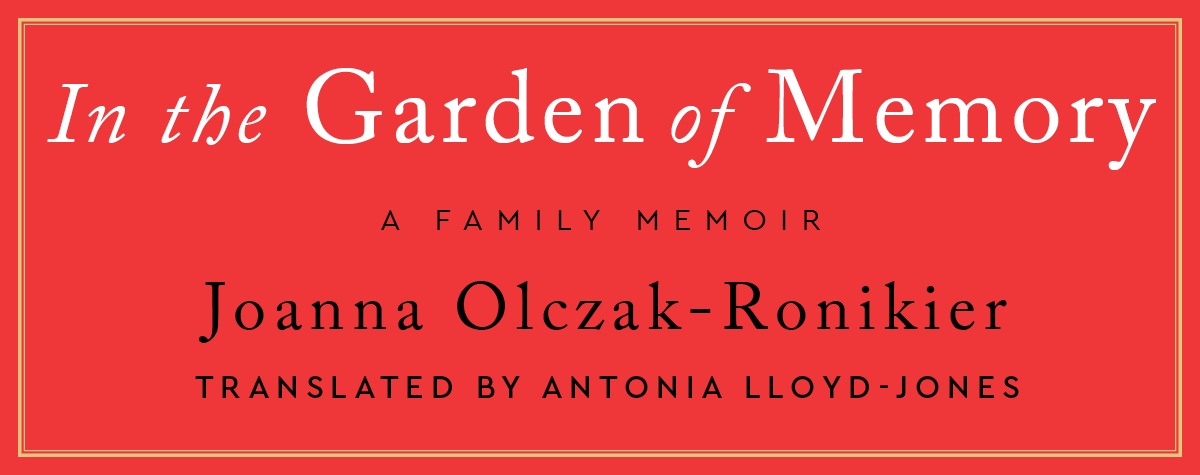
This is John Mish in New York after his arrival at the end of the war.