

Let's Lighten Up!
Watch the 2026 "Jimmys" Monday evening June 22, Live on You Tube...

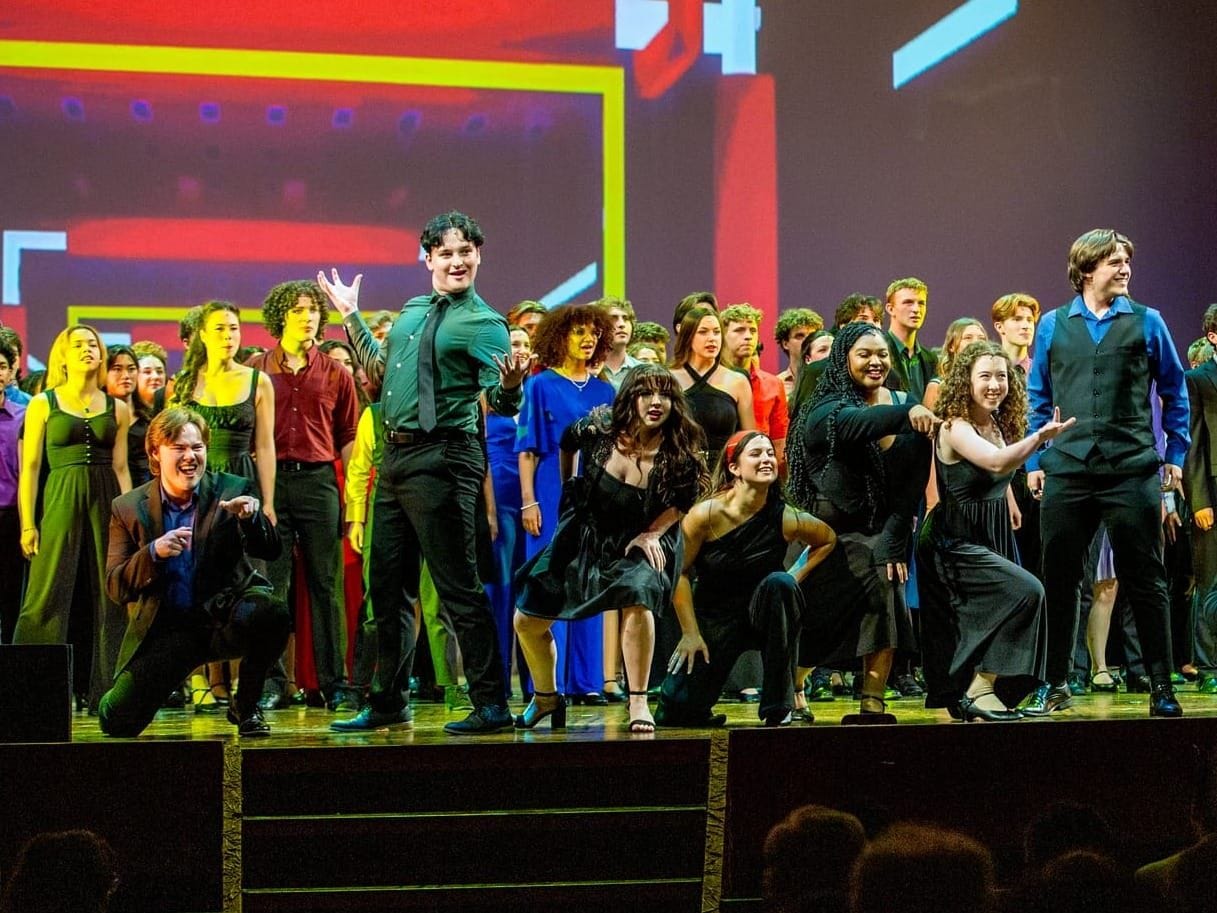
There is so much relentless attention now to the perils in virtually every realm of our lives that it is a particular pleasure to highlight two national competitions that prove that talent, ambition, and commitment among the young are doing fine.
These take place annually at about this time of year and are expressions of unadulterated joy and amazing skill among those between ten and eighteen years old all across the country.
They are the Scripps National Spelling Bee, the finals of which took place on May 28 in Washington, D.C., and was broadcast and streamed live in prime time. The other one is the National High School Musical Theater Awards, with the finals taking place in New York on June 22 and streamed live on YouTube.
Known as the Jimmy Awards, they were started in 2009 by the Pittsburgh Civic Light Opera and Nederlander Alliances, a division of the Nederlander Organization, and were named after the theater owner James “Jimmy” Nederlander. The idea was based on the Gene Kelly Awards at the Pittsburgh Civic Light Opera, honoring the hometown star of stage, screen, and dance.
We spotted an ad in the New York Times in 2018, and as fans of musical theater we bought tickets. The performance is always on a Monday night at the Minskoff Theatre, where The Lion King is staged the rest of the week.
Every seat in the large theater was full, and we quickly realized that the rest of the audience consisted of family and friends who had traveled from around the country to root enthusiastically for someone. We were there rooting for everyone and enjoying the show, which we thoroughly did.
We went back several times (alas, the 2020 performance was cancelled because of Covid-19), and when we could no longer get tickets, we watched from home, which to be honest is less thrilling, but nonetheless impressive.
The competition draws about 180,000 boys and girls from sponsoring theater groups and high schools in regional competitions, and more than one hundred finalists are invited to New York for a week of intensive rehearsals with professional coaches, culminating in a fully staged show consisting of group and ensemble displays of singing and dancing drawn from established musical theater repertoires.
The judges choose about a dozen kids to perform solos, and one boy and one girl are chosen as the champions, with prizes also awarded for best dancer, best performance in an ensemble, and most improved in the week. The two champions each receive a $25,000 scholarship, with smaller awards given to the finalists and other category winners. And two teachers are also honored.
The host is a Broadway star, and previous winners who are currently performing on stages around the nation are guests.
What is amazing is that in the space of a week the show is polished to a spectacular shine. Film clips of the nominees rehearsing and visiting the Great White Way and environs reflect the intensity of the preparation and the fun of being together with other teenagers of consummate talent.
And lest there be any doubt, the high schoolers reflect the full spectrum of the country’s population, an inspiring mélange of sizes, shapes, and colors. This means that there are tens of thousands of kids for whom musical theater is a favored activity.
One thing no one does while performing is look at their phones or other screens.
The spelling bee has a different vibe. The contestants are younger, not yet out of the eighth grade or fifteen years old. In its one-hundred-year history, supported as a nonprofit by the E.W. Scripps Company, the rules have evolved in detail but are essentially the same, with regional bees in the course of the year leading to the finals, where successive rounds winnow the group until there is one champion hoisting a very large trophy and taking home a $50,000 prize.
After the 2019 competition, in which eight contestants tied for the title, a spell-off was designed to determine a single winner. In 2026, the two finalists correctly spelled, respectively, thirty-two and twenty-five words in ninety seconds. This was every bit as exciting as a last-minute three-pointer in a basketball championship or a last-second field goal in football.
Watching these kids handle the pressure in the prime-time two-hour telecast is, to use a term I suspect is familiar to all of them, awesome.
To get to these finals requires prodigious commitment by the contestants and their families. They are at Olympic-level proficiency, which doubtless requires as much training, discipline, and support as the greatest of quadrennial medal champions.
Because the record of winners includes so many South Asians, mainly with Indian backgrounds, there are assumptions about their being naturally gifted. I have no idea whether this is the case, but this year’s nine finalists included a twelve-year-old Irish-American from Texas, a Black speller from Maryland, and a mixture of others, with the spell-off between two boys of demonstrably Indian heritage.
So, my fellow Americans, let’s celebrate how many youths there are doing these astounding things.
And I should add that a favorite social media feature in late spring are those commencement pictures posted by families on Facebook and other sites.
Yes, let us rejoice where we can.

Two of my favorite competitions! Thank you so much for spotlighting and brightening my morning. And to add just one more to this terrific list--the yearly debate competition in New York Mills, MN, that happened earlier this month: The Great American Think Off. Always worth a watch on YouTube as well.