

Orban Ousted...
And the Message for Illiberalism, Autocracy, and Donald Trump

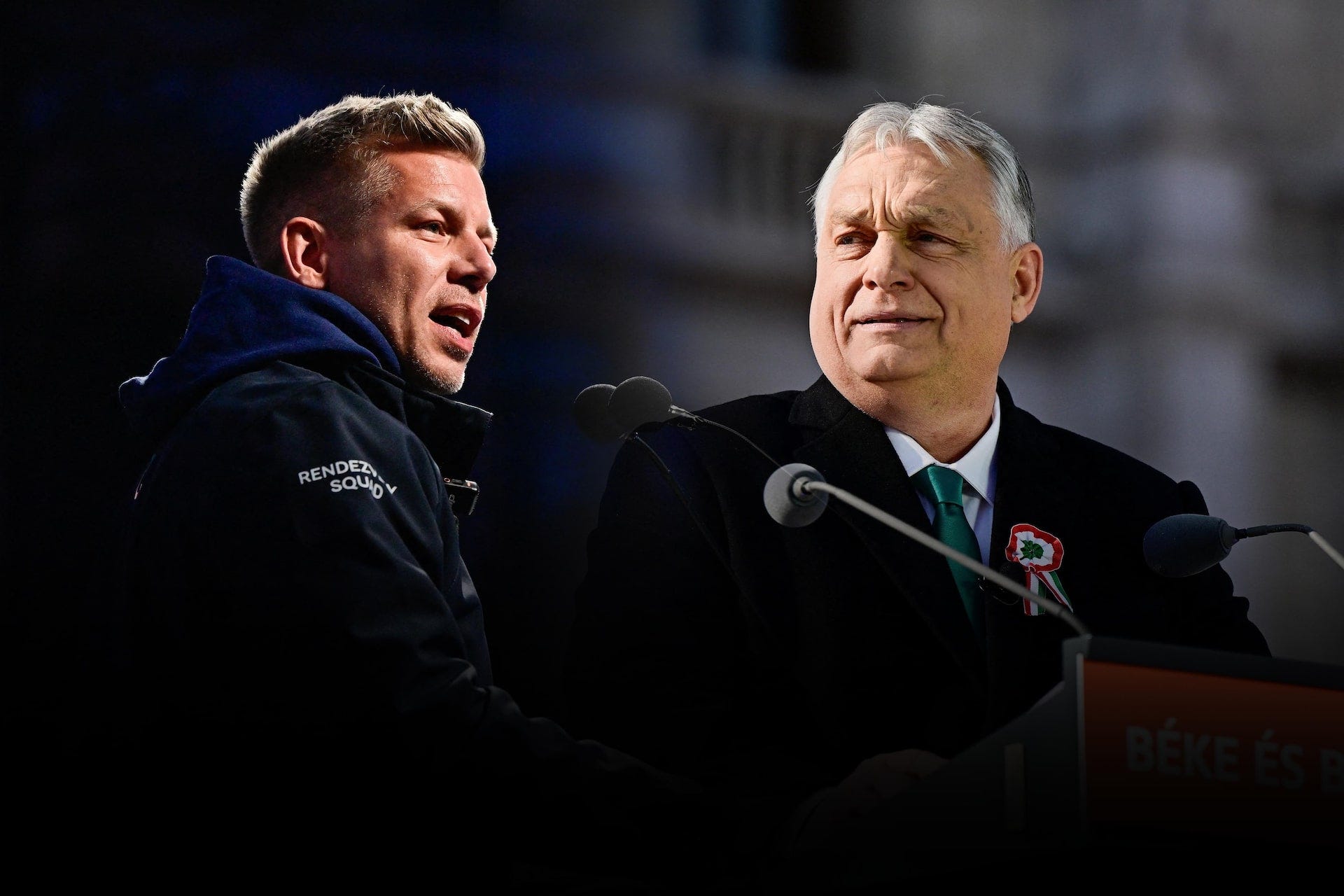
Viktor Orban, the former prime minister of Hungary, had many fans in MAGA, led by Donald Trump and including organizations like CPAC and influencers like Tucker Carlson, who broadcast encomiums from Budapest.
Orban was the avatar for authoritarian illiberalism, in twenty-first-century parlance.
And then, summarily, the voters of Hungary ousted him on April 12, with an overwhelming election victory for his opponent, Peter Magyar.
Exactly what this will mean for Hungary will take time to evolve. Orban’s tentacles in Hungarian society and politics remain deep. But he has accepted his departure, resigning from parliament. His supporters seem to know their movement is done, at least for now.
The demise of Orban is significant for a number of reasons:
(1) He and his regime had done everything possible to manipulate the results in their favor. And the majority against him was so large that denial of the results was impossible.
(2) George Soros was deemed Orban’s political enemy, with the prime minister joining revanchists and antisemites elsewhere in demonizing him. Soros shrugged off most of these personal attacks, but Hungary was his homeland. Now, at age ninety-five, Soros has outlasted Orban. Bravo!
(3) The election results in Hungary, placed in the context of developments elsewhere in what had been the Soviet Union and its Warsaw Pact satellites, reflect an important reality in the aftermath of the Cold War.
The fifteen republics of the USSR and the satellites have largely gone their own way since 1991. Many have reverted to their historical place in the world. Central Asia and the Caucasus nations, for instance, are truculent, varied in size, but no longer actually controlled by the Kremlin, although they are very aware of Russia’s regional dominance.
Russia’s invasion of Ukraine is in a different realm of consequences for the region, with Vladimir Putin capable, at any time, of unprovoked menace.
For many of the nations of Eastern Europe — Bulgaria, Romania, and the states that once made up Yugoslavia — it is challenging to keep up with their twists and turns. But their examples do not pose a threat to democracies elsewhere, as Hungary seemingly did.
My particular interest has been the most prominent of the former East bloc nations: Poland, what was Czechoslovakia, and Hungary. All have been wrangling with their identities.
Poland is an economic success and a major member of the European Union. It swings politically from liberalism to nationalism, with traditional splits among the church, urbanites, and (broadly defined) farmers and workers.
Czechoslovakia split in two in 1993. Prague seems to be where the young and cool congregate. Slovakia leans toward illiberalism.
I don’t know enough about Hungary to explain the developments there. So, I was referred to Tibor Dessewffy, the director of the Digital Sociology Research Center at Eotvos Lorand University in Budapest and a member of the European Council on Foreign Relations.
I put two questions to him by email:
Can you explain why Orban so readily conceded? That is not generally in the autocrat’s approach.
Were Hungarians surprised at the success of their popular will?
Here are his answers:
Orbán’s concession has to be understood in the context of what was truly a historic and unprecedented victory for the opposition TISZA — a genuine knockout blow for Orbán. In that sense, his quick concession was less an act of magnanimity than an attempt to bring a bitter evening to a close as swiftly as possible.
I am fairly certain that had the result been a narrow, neck-and-neck defeat, the reaction would have been very different. On a micro level, however, he was probably right to shut the evening down quickly and not allow the sense of shock and pain to deepen further. If reports are accurate, he had been prepared for a different kind of outcome — losing some support on the party list while still prevailing in the individual districts.
What he did not anticipate was a landslide of this scale.
This also leads to your second question. The result was genuinely astonishing for almost everyone. Although there were one or two polling institutes measuring a significant TISZA lead, after sixteen years of illiberalism and four painful opposition defeats, very few people truly dared to believe that such a moment, winning by supermajority could actually arrive.
The eruption of joy and the extraordinary emotional release on election night was partly rooted in this disbelief as well.
With these responses in mind, I wondered what the message for Americans and our “allies and partners” around the world would be.
Yes, the situation does seem dire. In the United States, the Democrats have yet to display the leadership style and the potential nominees necessary to defeat MAGA in 2028. In Europe and Asia, illiberalism is a threat or a reality. Hungary demonstrates that if the resistance and popular will align and mobilize, even the improbable can happen.
The U.S. midterm elections will be the first real test of MAGA’s enduring power, a forecast for Trump’s remaining years and the scale of popular demands for democracy over autocracy. I hope the results will be unequivocal, as they needed to be and were in Hungary.

https://petejakab.substack.com/p/autocrat-repellent