

WHY?
The Evolution of Jeff Bezos

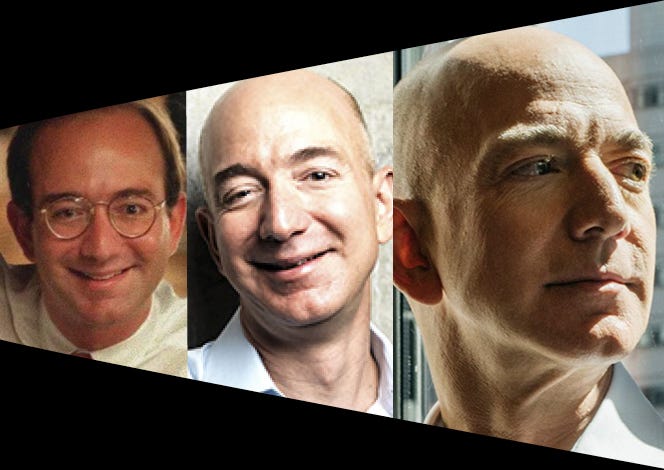
I always project myself to age eighty, but as I get older, I’m starting to do ninety — so I know that when I’m ninety. It’s going to be one of the things I’m most proud of, that I took on the Washington Post and helped it through a very rough transition.
— from Invent and Wander: The Collected Writings of Jeff Bezos (Harvard Business Review Press and PublicAffairs, 2020)
**************************
Jeff Bezos and Lauren Sánchez Bezos Will Be Honorary Chairs of the Met Gala.
— The New York Times, February 23, 2026
****************************
By now, everyone anywhere who could possibly care knows that Jeff Bezos is reducing the Washington Post to a remnant of what he bought and has owned for more than a decade. Explanations and theories of why he is doing this abound. The Post is losing money. Bezos is cultivating Donald Trump. Bezos wants Pentagon contracts for Blue Origin, his space passion. With his new wife and his own buff new looks, Bezos favors glamour over accountability.
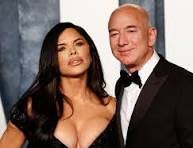
The reality is that no one can really explain to me why Jeff Bezos has made this decision. I have asked the only people I know who might have an answer. Either they won’t say or their response is a chilling “He doesn’t care.” I find that hard to believe.
As a mogul who created Amazon from scratch decades ago, he must know that there are reputational aspects to business. Trashing a media icon is a guarantee of public vituperation. Combining it with the incessant self-portrayal of luxury living, which chairing the Met Gala symbolizes, is clueless and/or cruel, accompanied days later by the firing of hundreds of people at the Post and then the hapless CEO Will Lewis.
Bezos became executive chairman of Amazon’s board of directors in 2021, telling Amazon employees that the new position would give him the time and energy to “focus on the Day 1 Fund, the Bezos Earth Fund, Blue Origin, The Washington Post, and my other passions.”
My connection to Bezos was his book, Invent and Wander, which I conceived and published — a project that he said pleased him and was profitable to all concerned. His $750,000 in royalties went, I was told, to the New Orleans Public Library system. We have not been in touch since.
So, how to explain what has happened to Jeff Bezos?
My explanation is essentially these factors:
In 2019, Bezos and his wife, MacKenzie Scott, divorced after twenty-six years of marriage, with a financial settlement giving Scott 25 percent of his Amazon shares. In 2026, Bezos’s wealth is around $230 billion, about ten times what it was when he bought the Post in 2013 for $250 million.
Bezos’s affair with Lauren Sánchez went public in lurid detail in the National Enquirer immediately after he and Scott announced they would divorce. He was fifty-five years old. He married Sánchez in 2025 at a lavish wedding in Venice.
Whatever else Bezos had accomplished up to then, he plainly wanted a different style of life. He and the new Mrs. Bezos became fixtures at every conceivable venue of vast wealth, on his $500 million yacht, at new Gilded Age events around the globe, at the inauguration of Donald Trump to his second term.
By comparison, Bezos’s philanthropy received little attention, including his establishment in 2021 of the Courage and Civility Award, with $100 million each going to Van Jones, a lawyer, civic activist, and CNN contributor, and José Andrés, the chef and humanitarian, to distribute to charities and nonprofit organizations of their choice. Dolly Parton received $100 million, and the actress Eva Longoria and the retired admiral and bestselling author William McRaven received $50 million each, on similar terms.
After the Post achieved a major turnaround in scale and financial results, the situation there began to deteriorate. Marty Baron, the executive editor Bezos had inherited, who was credited with the enhancement of the Post’s journalistic achievements, retired. Bezos found a distant sinecure for the publisher, Frederick J. Ryan, who was deemed a failure in business and leadership terms.
Will Lewis, a British journalist with a background in the Murdoch publishing empire, was named publisher and CEO. Sally Buzbee, who had been hired from the Associated Press as Baron’s successor, resigned in an early dispute with Lewis. The simple summation is that matters steadily worsened from then on.
Instead of declarations of pride in the Post, Bezos said publicly he would “save” it a second time. He was quoted as calling the news organization a “complexifier” in his extensive professional and reinvented personal life.
Which brings me to the second factor in what has happened to the Post.
I think of it as the Michael Jordan metaphor. One of the greatest basketball players of all time was at best mediocre in baseball. Jeff Bezos is unquestionably one of the greatest entrepreneurs in American history. He has flailed in journalism because he demonstrably doesn’t understand how it is done — both in its role as an indispensable public asset and as a business.
And, from what little I have been able to find out in my efforts at excavating the Post debacle, Bezos is not prepared to listen and learn from people who could advise him on a now-essential transformation. His newly named interim publisher, Jeff D’Onofrio, joined the Post in 2025 after a career at the digital companies Raptive, Tumblr, and Google.
Matt Murray is the executive editor, and his view is that with the contraction in the newsroom the “table has been set” for the Post’s recovery. That will be the subject of my piece next week.

Inciteful, as always. Cheers, Marilyn
Thank you for the insightful perspective. He's an enigma to me.